2011
IBPA Awards
The IBPA Personality of
the Year
Pierre Zimmermann

Our Personality of the Year is the man that many
bridge players are talking about and one that journalists have been writing about.
As a bridge player, he has recorded two wins in the World Transnationals (in
You will know to whom I refer when I mention the more
controversial matter of his formation of a team made up of four different
nationalities which is seeking to represent
This year our Personality has launched the Prince
Albert Cup in
Pierre Zimmermann is 56; he has five children aged
from 10 to 21; his second marriage, to Christine, was 15 years ago.
In 1990, Zimmermann founded his own real estate company,
Régie Zimmermann, which buys property, mostly near
Zimmermann enjoys golf (at which he professes to be
avid, but terrible), opera, classical music and musicals such as Les
Misérables.
Patrick Jourdain, IBPA President, 24th
October 2011

The Master Point Press
Book of the Year Award
Winner: The Rodwell
Files
Authors: Eric Rodwell
and Mark Horton
This
year’s candidates were of unusually-high quality in terms of originality of
material. Nevertheless, one book was adjudged by the jury of Patrick Huang (
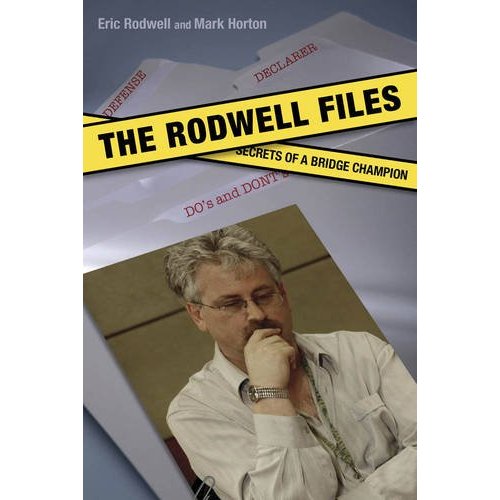
From the publisher’s
blurb:
Eric Rodwell's contributions to bidding
theory are well-known, but in this ground-breaking book he reveals for the
first time his unique approach to the play of the cards.
First, he describes and explains the
process for deciding on a line of play — using concepts such as +L
positions, tightropes, trick packages and Control Units as well as exploring
more standard themes such as counting winners, losers, and distribution.
Included here too is a checklist of 'defogging questions' to get you back on
track when your analysis gets bogged down. Then he moves on to a host of
innovative ideas in card play, strategies and tactics that can be used by
declarer or defenders, each one illustrated with real-life examples from
top-level play. Many of these ideas will be new to anyone below the bridge
stratosphere. Finally, under the heading 'DOs and DON'Ts', Rodwell talks about
the mental side of the game: areas where players often go wrong in their
approach to the problem at hand, areas that mark the key differences between an
average player and a successful one.
The original 'Rodwell File', the
collection of notes on which this book is based, has been in existence for more
than twenty years, but it is only now that the author is prepared to allow his
'secrets' to become public knowledge.
The 2011 shortlist :
Wladyslaw Izdebski, Roman Krzemien and Ron Klinger, Deadly Defence
Krzsyztof Martens, Guide Dog, Part I & II
Victor Moillo, The Hog Takes to Precision
Barry Rigal, Breaking the Bridge Rules, First Hand Play
Eric Rodwell and Mark Horton, The Rodwell Files
Peter Winkler, Bridge at the Enigma Club
The Alan Truscott Award
The Alan Truscott Memorial Award
is presented periodically to that person whose contribution to bridge, in the
opinion of the IBPA Executive, would be most appreciated by Alan.
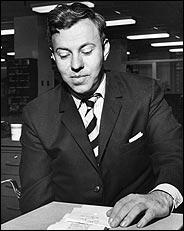
Alan
Truscott circa 1964, The New York Times
This year the award goes to
Roland Wald from
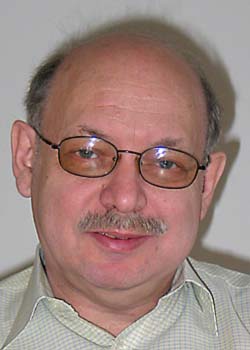
Roland
Wald
The
Keri Klinger Award for Pressure Play
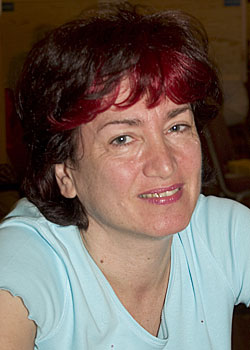
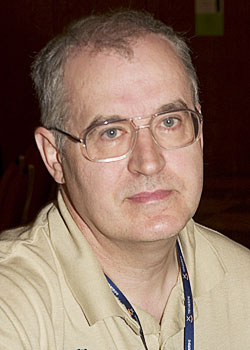
Michelle
Brunner John
This is a new IBPA award in
2011 sponsored by Ron and Suzy Klinger in memory of their daughter Keri. It is
awarded to an individual, pair or team who performs in admirable fashion under
pressure. This past year, no one did that better than Michelle Brunner and John
Holland from
Michelle won a Venice Cup and
was twice a winner of the Gidwani Family Trust Defence of the Year Award. Any
bridge player would be happy to claim either defence as the best deal of
his/her career. Michelle had both of them.
The IBPA Auction of the
Year
Winners: Venkatrao Koneru
and Ira Chorush,
Journalist: Brent
Manley,
From the Bobby Nail Life
Master Open Pairs, Fall
Dealer South. EW Vul.
♠ A
♥ A
Q J 8
♦ 8 7 5 4
♣ A
J 9 2
♠ 8 5 4 3 ♠ K Q
J 10 2
♥ 10 5 4 3 ♥ 9 7
♦ 10 6 3 ♦ J 9 2
♣ 7 3 ♣ K
10 8
♠ 9
7 6
♥ K
6 2
♦ A K Q
♣ Q
6 5 4
West North East South
Koneru Chorush
— — — 1♣
Pass 1♥ 1♠ Double1
Pass 2♠2 Pass 3♦3
Pass 4♣4 Pass 4♦5
Pass 4♠5 Pass 4NT6
Pass 6♣ Pass Pass
Pass
1. Support Double: three-card heart support
2. Strong hand; could be agreeing either hearts or
clubs, or looking for a stopper for 3NT
3. Values in diamonds
4. Confirms clubs; slam try
5. Cue bids
6. More encouraging than five clubs
The candidates:
Diamond/Platnick, IBPA Bulletin 550.19, Mark Horton (ENG)
Zia/Gold, IBPA Bulletin 552.2, Paul Lamford (ENG)
Zia/Gold, IBPA Bulletin 552.3, Paul Lamford (ENG)
Hackett/Holland, IBPA Bulletin 553.12, John Carruthers (CAN)
Koneru/Chorush, IBPA Bulletin 553.12, Brent Manley (
The Gidwani Family Trust
Defence of the Year
Winners: Mike
Kamil/Marty Fleisher (
Journalist: Brent Manley
(
From the Edgar Kaplan
Blue Ribbon Pairs, Fall
Dealer North. NS Vul.
♠ K 8 5 2
♥ 7 3 2
♦ A Q 9 6
♣ K 10
♠ J 10 7 4 ♠ Q 6
♥ K Q 10 4 ♥ 9 8 6
♦ K 5 ♦ J 8 7 4
♣ Q 9 5 ♣ J 8 6 2
♠ A 9 3
♥ A J 5
♦ 10 3 2
♣ A 7 4 3
West North East South
Fleisher Hand Kamil Greenberg
— 1♦ Pass
2♥
Pass 3♠ Pass 3NT
Pass Pass Pass
Fleisher led the heart queen, Rusinow. When that held, he shifted to the
spade jack. Declarer won dummy’s king, played a spade to her ace and led
a third round. West won the ten and exited with his last spade. Kamil discarded
his two remaining hearts and South threw a club.
Greenberg led a low diamond from the dummy to her ten and West’s
king. When West returned a diamond to dummy’s ace, declarer cashed
dummy’s club king. This was the position:
♠ —
♥ 7 3
♦ Q 9
♣ 10
♠ — ♠ —
♥ K 10 4 ♥ —
♦ — ♦ J 8
♣ Q 9 ♣ J 8 6
♠ —
♥ A J
♦ 2
♣ A 7
When South played a club to her ace unblocked his queen to avoid the endplay.
Then South cashed her heart ace. East unblocked his club jack. South led her
last club, but West took the final three tricks for down two.
Both defenders had unblocked in the same suit.
The candidates:
Willenken/Rosenberg, IBPA Bulletin 550.9, John Carruthers (CAN)
Kamil/Fleisher, IBPA Bulletin 553.4, Brent Manley (
Hoeyland, IBPA Bulletin 554.5, Jon Sveindal (
Alfrey/Robson, IBPA Bulletin 556.12, Roland Wald (DEN)
Krogsgaard/Kruse, IBPA Bulletin 556.15, Jens Otto Pedersen (DEN)
The Rose![03D[1]](2011%20IBPA%20Awards_files/image011.gif) Cliff Declarer Play of the Year
Cliff Declarer Play of the Year
Winner: Geir Helgemo (NOR)
Journalist: GeO Tislevoll
(NZ)
This board
occurred in a knockout match in
Dealer
South. Both Vul.
♠ A 9 7 4 3
♥ K 8 7 6 3
♦
A 6
♣ 7
♠ K J 10 6 5
♥ A
♦
K 7
♣ A 6 5 4 3
West North East South
Skjetnes
— — — 1♠
2♠ 2NT Pass 3♣
Pass 4♣ Pass 4NT
Pass 5♠ Pass 7♠
Pass Pass Pass
West’s two
spades showed at least 5-5 in hearts and clubs, and two no trump from North was
a game force with spade support. The three-club bid from South was natural, and
North’s four clubs showed shortage in their system, even in his
partner’s second suit, this time certainly a fine message for South. Over
the four-no-trump key-card ask,
West led the
club king, taken by South’s ace after East followed with the jack. The
contract is laydown if the trumps are 2-1. If the trumps are 3-0 declarer will
be able to pick up East’s trump holding, but there is no obvious line to
thirteen tricks after three rounds of trumps, as there will not be enough
ruffs. So why bother thinking of the 3-0 trump break anyway? Because it is
quite a likely layout! Helgemo’s first analysis was about the
distribution, and after his conclusion he backed his judgement to play in a way
that is difficult for most of us to spot even seeing the full diagram.
Helgemo’s
reasoning: West is likely to have six clubs unless East has played the jack
from a doubleton, but why would he? West has also shown five hearts, so the 3-0
break in trumps is becoming more and more likely. West’s distribution is
quite likely to be 1=5=1=6 or 0=5=2=6.
What about the
diamonds? If West has only one diamond, it gives East an eight-card suit, which
most players would have announced over North’s two no trump. And if West
has the 1=5=1=6 distribution, he could have led his trump. After all, trump
leads against grand slams are de rigeur
according to the classic rule. So the 0=5=2=6 distribution with West is
definitely the most likely one.
But we just
agreed there will be no way to thirteen tricks by picking up East’s trump
holding anyway, didn’t we? Well, there is a way. Look at the full
diagram, and follow Helgemo’s brilliant play, based on a technical
analysis of the hand which proves he is some sort of a human GIB:
♠ A 9 7 4 3
♥ K 8 7 6 3
♦
A 6
♣ 7
♠ — ♠ Q 8 2
♥ Q J 9 5 2 ♥ 10 4
♦
10 9 ♦
Q J 8 5 4 3 2
♣ K Q 10 9 8 2 ♣ J
♠ K J 10 6 5
♥ A
♦
K 7
♣ A 6 5 4 3
At trick two, Helgemo
played ace of hearts followed by the diamond king. (There is a case for playing
a low diamond to the ace and proceeding in a similar way to Helgemo, but see
below for Helgemo’s explanation of the reason he did not). Backing his
assumption about the distribution, he continued with a diamond to the ace. Then
he cashed the king of hearts before he played the spade nine from dummy, and
ran it!
What is the
difference between the direct finesse and playing the ace first? You will soon
see that both cashing the two diamond tricks and not touching the ace of spades
are essential to success. When the spade nine held, he continued with a spade
to the jack leaving this position:
♠ A 7 4
♥ 8 7 6
♦
—
♣ —
♠ — ♠ Q
♠ Q J 9 ♥ —
♦ — ♦ Q J 8 5 4
♣ Q 10 9 ♣ —
♠ K 10 6
♥ —
♦
—
♣ 6 5 4
West had to
discard on the first two trump rounds, and on both of them he had to pitch
clubs as he could not let go a heart which would have enabled declarer to set
up the fifth heart. Now the spade king was played when West was down to three
hearts and three clubs. If West discards another club on the spade king,
declarer plays a low spade from dummy, and simply establishes the fifth club
with two ruffs. He still has two trumps as entries to his hand. If West instead
throws a heart, declarer is able to overtake the trump king with the ace and
work on the heart suit, and still have enough entries to set up the fifth heart
and collect it.
To produce this
elegant trump squeeze situation, declarer must cash the two diamond tricks
before the third round of trumps, but more importantly he must also take a
first-round finesse in trumps by playing the nine and running it. The key is to
be able to play a third round of trumps from South in the situation where West
is trump squeezed, and be able to decide in which hand the third trump is to be
taken, according to what card West plays to that trick.
This hand not
only contains a spectacular squeeze that occurs after declarer has manœuvred
trumps in such a way as to enable him to choose which hand he wants to be in on
the third trump round of the suit, but also a first-round finesse for the trump
queen in a grand slam, with ten trumps between declarer and dummy! That trump
finesse is based on perfect visualisation of the distribution, and also
foreseeing the complex and unusual squeeze coming up. The grand slam was
reached at the other table too, but declarer was not able to duplicate
Helgemo’s play and went one down.
Some analysts
would claim that declarer should play a low diamond to dummy at trick two, then
run the spade nine followed by spade to the jack. If the trumps prove to be
3-0, declarer can proceed as Helgemo did by cashing the diamond honour from his
hand before the third trump round. This will save declarer from going down when
West – against what is the most likely distribution – has 1=5=1=6
anyway, and does not hold the bare trump queen. Playing only one round of
diamonds first, then running the spade nine where West follows with the small
one, declarer could have pulled a second round of trumps and claimed, and been
very happy West did not have the bare trump queen.
Helgemo told me
he was perfectly aware of that line, but chose to play the diamond king first
so he did not have to commit himself to the 3-0 break in trumps at trick two.
Playing the diamond king first allowed declarer to see West’s card before
committing himself. If West followed with the jack or queen, there was a
greater chance that East still could have eight diamonds, but holding a much
weaker suit, which would not be as tempting to bid, than if West followed with
a small card, giving East – assuming west has the 1=5=1=6 distribution
– an eight-card suit headed by the queen-jack.
If West had followed
to the diamond king with, for example, the diamond queen, Helgemo could have
changed his mind and played for the 2-1 trump break as all us other normal
human beings would have done. So the hand is a combination of research, table
feel, and an amazing technique that makes the play unusual.
Helgemo said to
me:” I played the percentages.” Wow! Well, he is right in a way.
But if we awestruck spectators say: “He JUST played the
percentage”, it would be the biggest understatement for years, maybe even
for decades.
The
candidates:
Rehder, IBPA Bulletin 551.11, Tim
Verbeek (NED)
Sharon Gerstman, IBPA Bulletin 553.13, Dan Gerstman (USA)
Nakamura, IBPA Bulletin 554.6, Ron Klinger (AUS)
Helgemo, IBPA Bulletin 555.9, GeO Tislevoll (NZ)
Duboin, IBPA Bulletin 558.2, Jos Jacobs (NED)
The Richard Freeman
Junior Deal of the Year Award
Winners: Cédric
Lorenzini/Christophe Grosset (FRA)
Journalist: Patrick
Gogacki (FRA)
Located south of the Tropic of Cancer,
Kaohsiung is a tropical city with temperatures largely in excess of 30°C ; humidity is around 80%.
The port of Kaohsiung is one of the biggest in the world, and is important
particularly in container transport. The city is home to the National Sun Yat-sen
University, host of the 5th World University Bridge Championships,
organised by FISU (Fédération Internationale des Sports
Universitaire). The French delegation comprised three pairs,
Cédric Lorenzini-Christophe Grosset, Alexandre Kilani-Simon Poulat,
Thibault Coudert-Aymeric Lebatteux, and a non-playing captain, the author of
this article.
Here’s a superb
example of how to make the declarer stumble in three no trump:
♠ K 9 5 4
♥ Q 7 3 2
♦ 10 5
♣ J 5 3
♠ A 6 2 ♠ J 10 7
♥ J 6 ♥ A K 10 8 5
♦ A K Q 4 ♦ 6 3 2
♣ Q 7 6 2 ♣ 9 8
♠ Q 8 3
♥ 9 4
♦ J 9 8 7
♣ A K 10 4
West North East South
Grosset
Lorenzini
1NT Pass 2♦ Pass
2♥ Pass 3NT Pass
Pass Pass
Christophe
Grosset led the four of spades and declarer played the ten from dummy. Cédric Lorenzini did not cover - he wanted to
deny declarer a later entry to the hearts. In dummy with the ten of spades,
declarer played a small heart to the jack, ducked in tempo by Grosset! And that
was the end. Not able to imagine such a Machiavellian scheme, declarer next
cashed the ace
and king of hearts and was not able to recover.
Chiu, IBPA Bulletin 550.17, Brian Senior (ENG)
Grosset-Lorenzini, IBPA Bulletin 552.6, Patrick Bogacki (FRA)
Fisher, IBPA Bulletin 555.13, Roland Wald (DEN)
Johansen, IBPA Bulletin 559.3, Brian Senior (ENG)
Birman, IBPA Bulletin 559.5, Ram Soffer (ISR)
Lorenzini, IBPA Bulletin 559, Brian Senior (ENG)